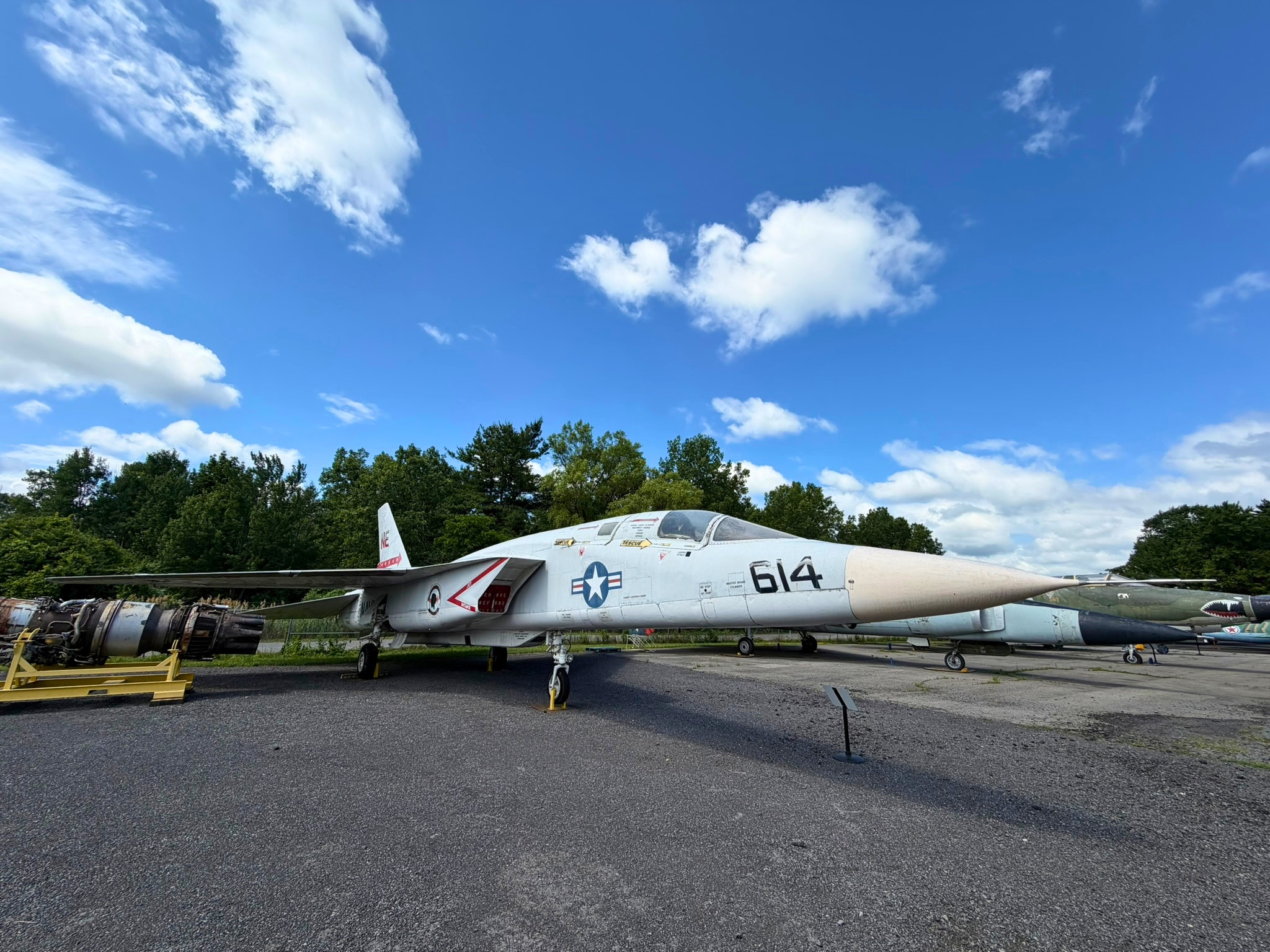
The Vigilante was designed during the 1950’s as a two-seat, carrier-based heavy attack bomber solely for the nuclear strike mission. First flown in
1958, the Vigilante was extremely advanced and featured numerous innovative features. Its flight controls, for example, featured wing spoilers instead of ailerons, as well as a one-piece vertical tail instead of a hinged rudder.
With its sleek design and high performance, the Vigilante was spectacular, and was the largest plane ever operated from an aircraft carrier. Its two General Electric J-79 turbojets gave it a top speed of Mach 2.1.
In 1963, the U.S. Navy gave up its aircraft-delivered nuclear strike responsibility, and the A-5 Vigilante suddenly was a plane without mission. At the same time, the Vietnam War was escalating and there became an urgent need for a high-performance carrier-based reconnaissance aircraft. As a result, the existing fleet of A-5s, together with 48 new production aircraft, were converted for the reconnaissance mission and designated RA-5C. With its combination of speed, long range, and advanced radar, the RA-5C was unparalleled in its role. The Vigilante was so fast, that its fighter escorts often had a hard time keeping up with it! The canoe-like pod under the fuselage carried sophisticated side-looking radar, infra-red sensors, and cameras.
During the Vietnam War, the RA-5C’s primary mission was Bomb Damage Assessment – post strike reconnaissance. An extremely dangerous mission, since anti-aircraft defenses were fully alerted, of the 130 Vigilantes produced, 18 were lost on these missions.
ESAM’s RA-5C served with the U.S. Navy’s Reconnaissance Squadron 5 (RVAH-5) deployed on the USS Ranger, December 1972 on “Yankee Station,”
Gulf of Tonkin. It was acquired from the USS Intrepid Sea, Air & Space Museum in New York City.
THIS AIRCRAFT IS ON LOAN FROM THE NATIONAL MUSEUM OF NAVAL AVIATION AT PENSACOLA, FLORIDA.