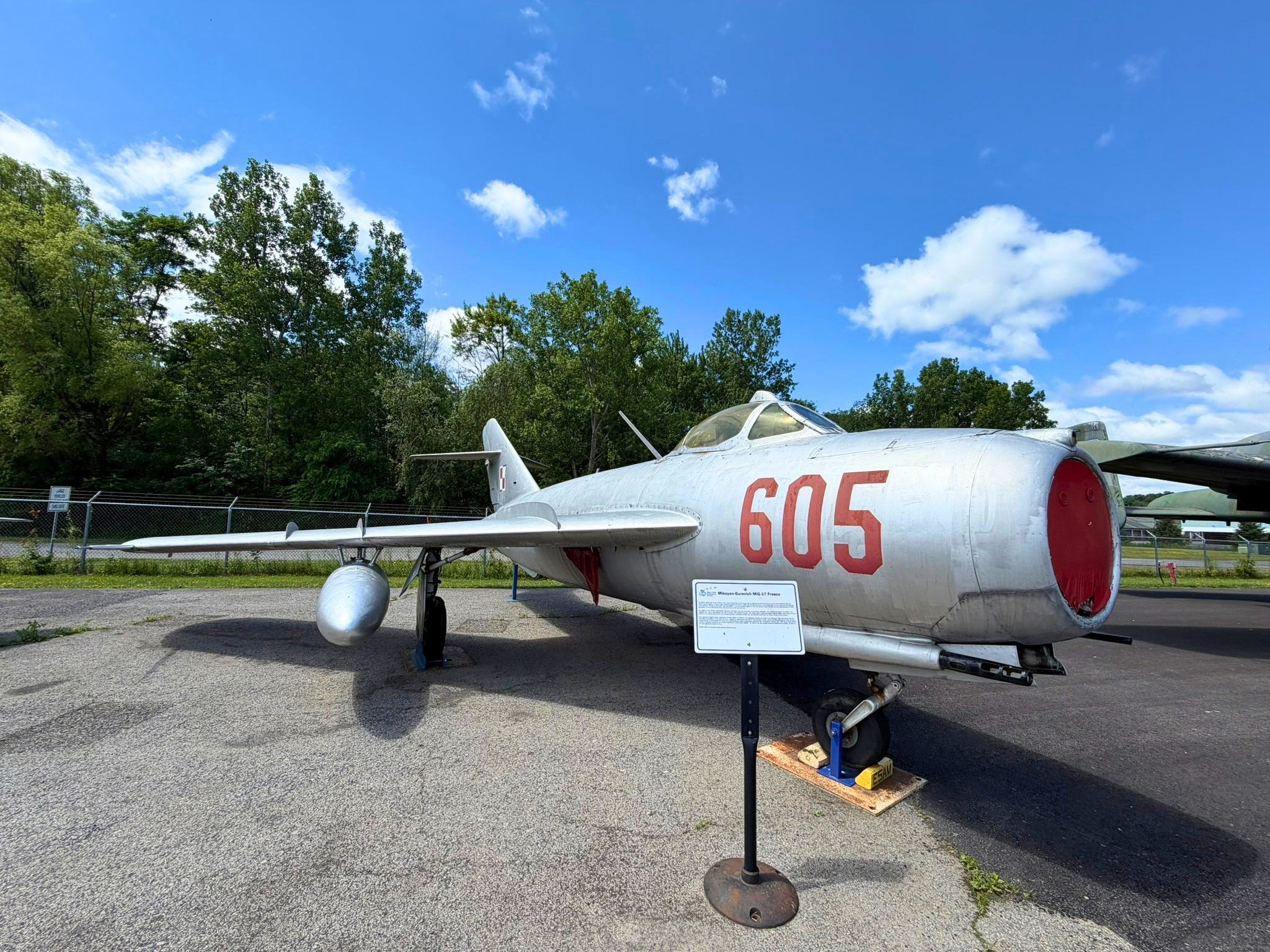
The MiG-17 (NATO code name “Fresco”) was a direct descendent of the Korean War-era MiG-15 and went on to be one of the most prolifically built and
widely exported fighters in history. Since entering operational service in 1952 with the Soviet Air Force, over 10,000 MiG-17s were produced and exported to 30 countries. During the late 1950’s and early 1960’s, it was the standard fighter for all of the Warsaw Pact countries, and was manufactured in Poland and China, as well as the Soviet Union, and was an icon of the Cold War era.
As a fighter, it was strictly a short-range interceptor with little in the way of avionics or all-weather capability. Like most Soviet fighters, the MiG-17 was ruggedly built, easy to manufacture, and able to operate from primitive runways. This single-engine, single-seat fighter featured highly swept wings and was powered by an afterburning Klimov VK-1 turbojet, giving it a top speed of 696 mph, and typically armed with two 23mm and one 37mm cannon.
Once supersonic fighters began appearing in the late 1950’s, the MiG-17 was considered obsolete and began to be replaced in front line service with the later MiG-19 and MiG-21 in the Soviet Air Force. Despite its obsolescence, the MiG-17 saw extensive service with the North Vietnamese air force and gave a good account of itself against the much more sophisticated and higher performance American fighters during the Vietnam War. With its low wing loading and gun armament, it proved to be a nimble opponent in a close-range dogfight. The MiG-17 also saw combat during the Middle East conflicts, but did not fare well against the Israeli air force.
ESAM’s MiG-17 previously served with the Polish Air Force.