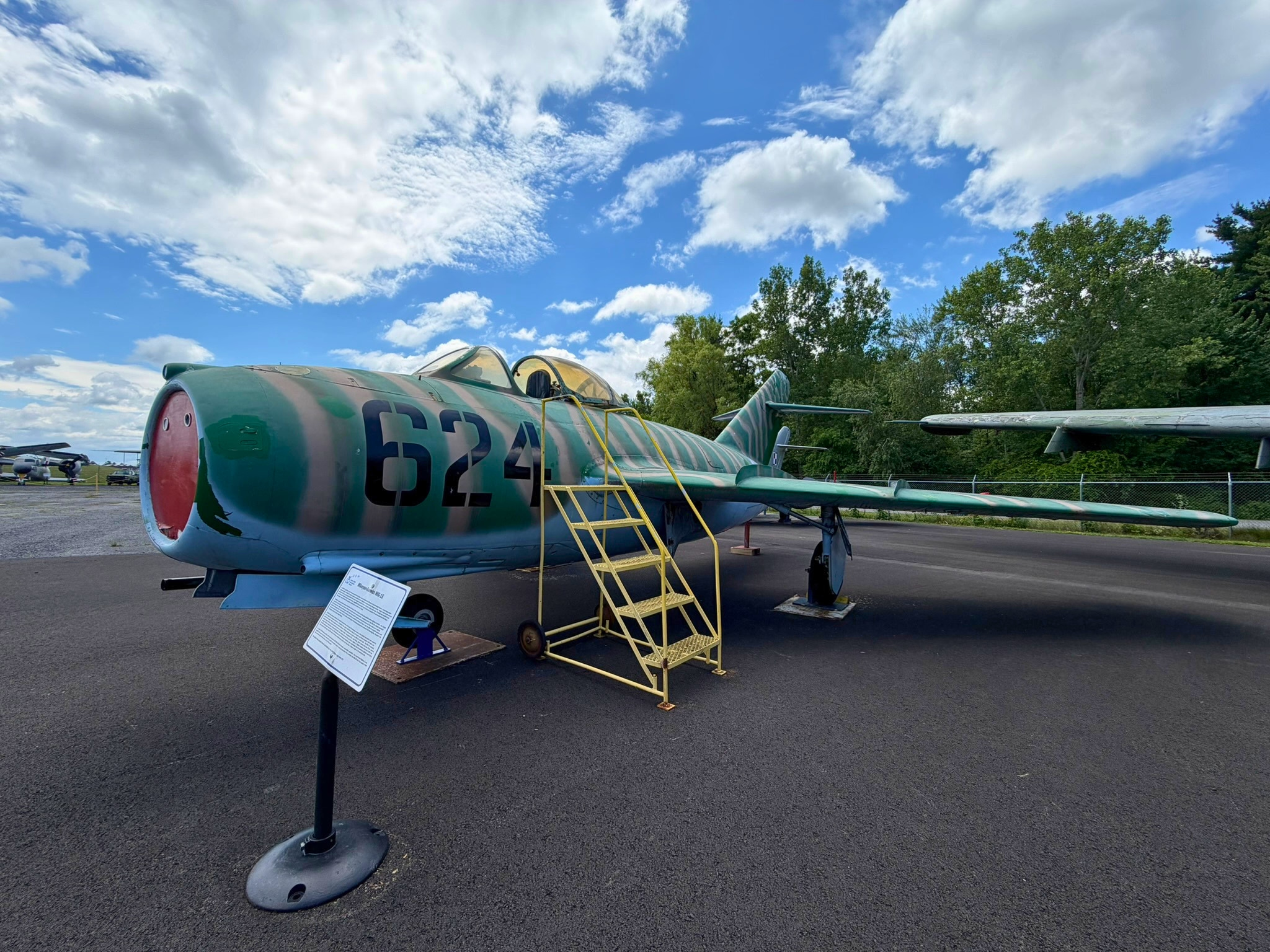
The MiG-15 is significant as the first successful Soviet jet fighter, and was designed by the Mikoyan and Gurevich Design Bureau. A small single-engine,
single-seat fighter, the MiG-15’s primary mission was intended to be an interceptor to counter American strategic bombers. Design of this aircraft was very advanced for its day, and greatly benefited from German research during World War II on the use of a highly swept wing. The design also benefited from one of the worst military blunders in modern history, when Great Britain surprisingly happily handed over examples of its new and powerful Rolls Royce Nene engine, which the Soviet Union promptly manufactured as the Klimov VK-1 turbojet.
The MiG-15 entered operational service with the Soviet Air Force in 1949, and became one of the most prolifically built jet fighters of all time - over 12,000 were built in the Soviet Union, and a further 6,000 were built under license by several countries. In operational service, the MiG-15 is closely associated with the Korean War. When that conflict began in 1950, Allied forces enjoyed air supremacy over the North Korean Air Force, made up of a rag-tag collection of obsolete aircraft. When the MiG-15 suddenly entered the war, operated by the Chinese Air Force, it took the Allies by complete surprise, and proved far superior to the jets in service at the time, namely, the piston-engine P-51 Mustang and jet-powered Lockheed F-80 Shooting Star, Republic F-84 Thunderjet, and Great Britain’s Gloster Meteor.
The MiG-15 was particularly effective in its intended interceptor role, downing many B-29 bombers, so much so that daylight operations were ceased in favor of night raids to targets in North Korea. The supremacy was, however, short-lived when the U.S. Air Force’s new North American F-86 Sabre was rushed to the Far East. While both fighters had similar performance, F-86 Sabre pilots went on to down the MiG at a rate of 10:1. The MiG, for example, enjoyed a higher ceiling, and could determine if, and when, to engage in combat. Its armament of two, hard hitting, 23mm cannon and one 37mm cannon, although effective for attacking a non-maneuvering bomber, had a relatively slow rate of fire, not ideal for fighter vs. fighter combat, where the F-86’s six
.50 caliber machine guns were superior. The F-86’s dominance over the MiG was also noteworthy when considering that the American fighters were flying at the extreme of their range, while MiG’s took off from their protected bases just West of the Yalu River in China in sight of the American jets.
As a fighter, the MiG-15 was strictly a short-range interceptor with little in the way of avionics or all-weather capability. Like most Soviet fighters, it was ruggedly built, easy to manufacture, and able to operate from primitive runways. Powered by the Klimov VK-1 turbojet, the MiG-15 had a top speed of 668 mph, and was armed with two 23mm, and one 37mm cannon.
THIS AIRCRAFT WAS ACQUIRED FROM THE USS INTREPID SEA, AIR & SPACE MUSEUM IN NEW YORK CITY.