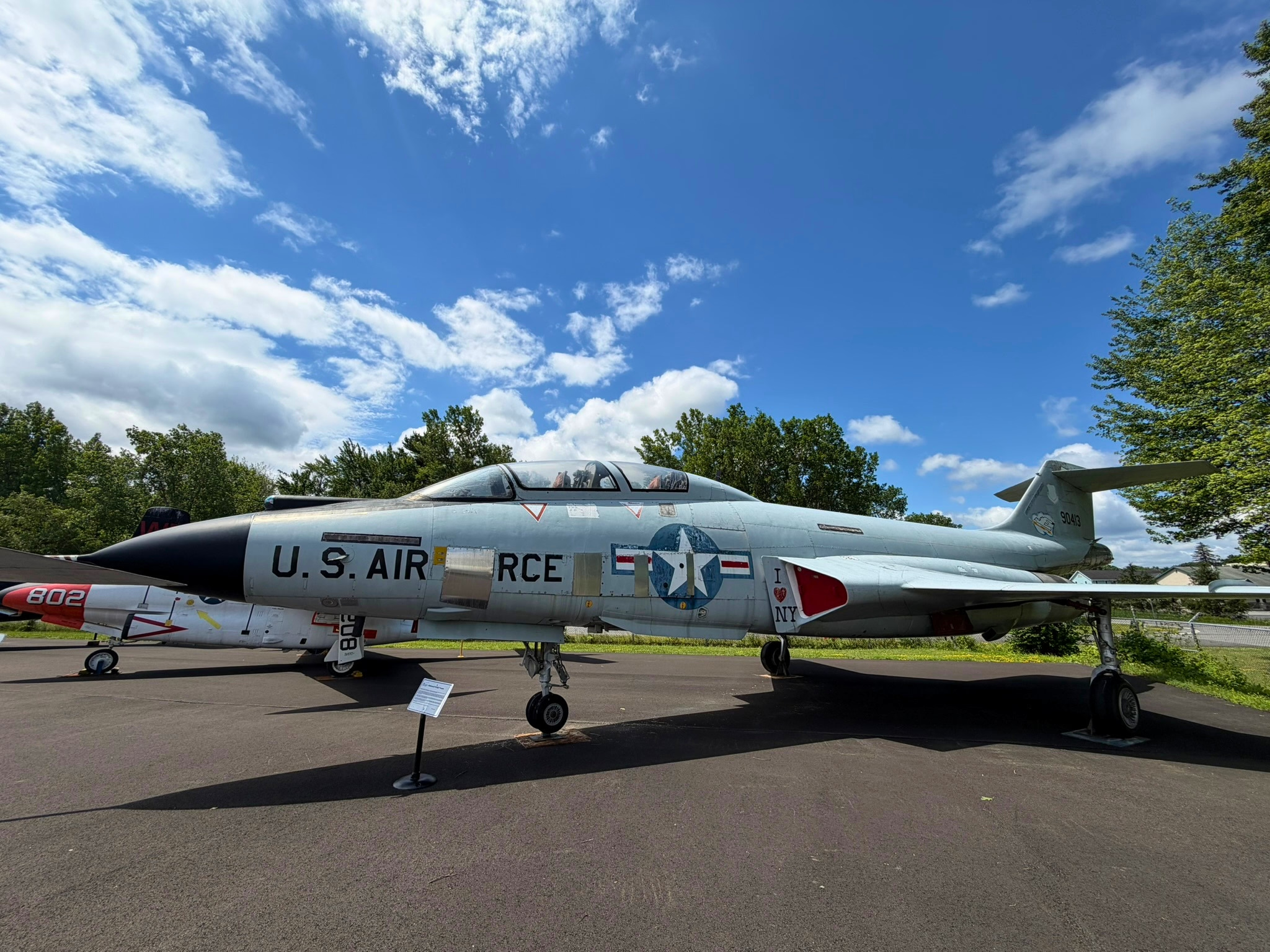
The F-101 Voodoo was the largest fighter of its time, and with its small, angular wings and large engine exhausts, it exudes power. Although it never fired a
shot in anger, the Voodoo was an icon of the Cold War, which guarded the U.S. against Soviet bombers.
The F-101 was originally conceived during the late 1940’s as a single-seat, long-range escort fighter for Strategic Air Command’s bombers. While this mission never materialized, the definitive production version of the F-101 was the two-seat “B”, which enjoyed a long service life with the U.S. Air Force’s Air Defense Command (ADC), tasked with defending North American airspace. About 470 F-101B’s and F’s (slightly modified version which featured rear seat flight controls) were delivered to ADC from 1959-62, and during the early to mid-1960’s, the Voodoo was the most numerous fighter in the ADC inventory, equipping 17 squadrons.
The Voodoo was fast, with a top speed of Mach 1.8 (1,500 mph), had a range of over 1,800 miles, and featured an armament of four air-to-air missiles, including the AIR-2 Genie. The Genie was an unguided missile equipped with a nuclear air-blast warhead intended as a last ditch means of destroying Soviet bombers attempting to penetrate North American airspace.
While very capable as an interceptor, the Voodoo was not a classic fighter able to effectively engage other fighters. With its high wing loading and heavy weight, the F-101 was not very maneuverable. It was also known to be difficult to fly and maintain, but very capable in its mission. Also operated by the Royal Canadian Air Force, the last Voodoos were retired in 1987.
ESAM’s F-101 was delivered to the U.S. Air Force in 1959 and last served with the 107th Fighter Interceptor Group of the New York Air National Guard at Niagara Falls Airport.
THIS AIRCRAFT IS ON LOAN FROM THE NATIONAL MUSEUM OF THE UNITED STATES AIR FORCE.
Serial No. 59-0413