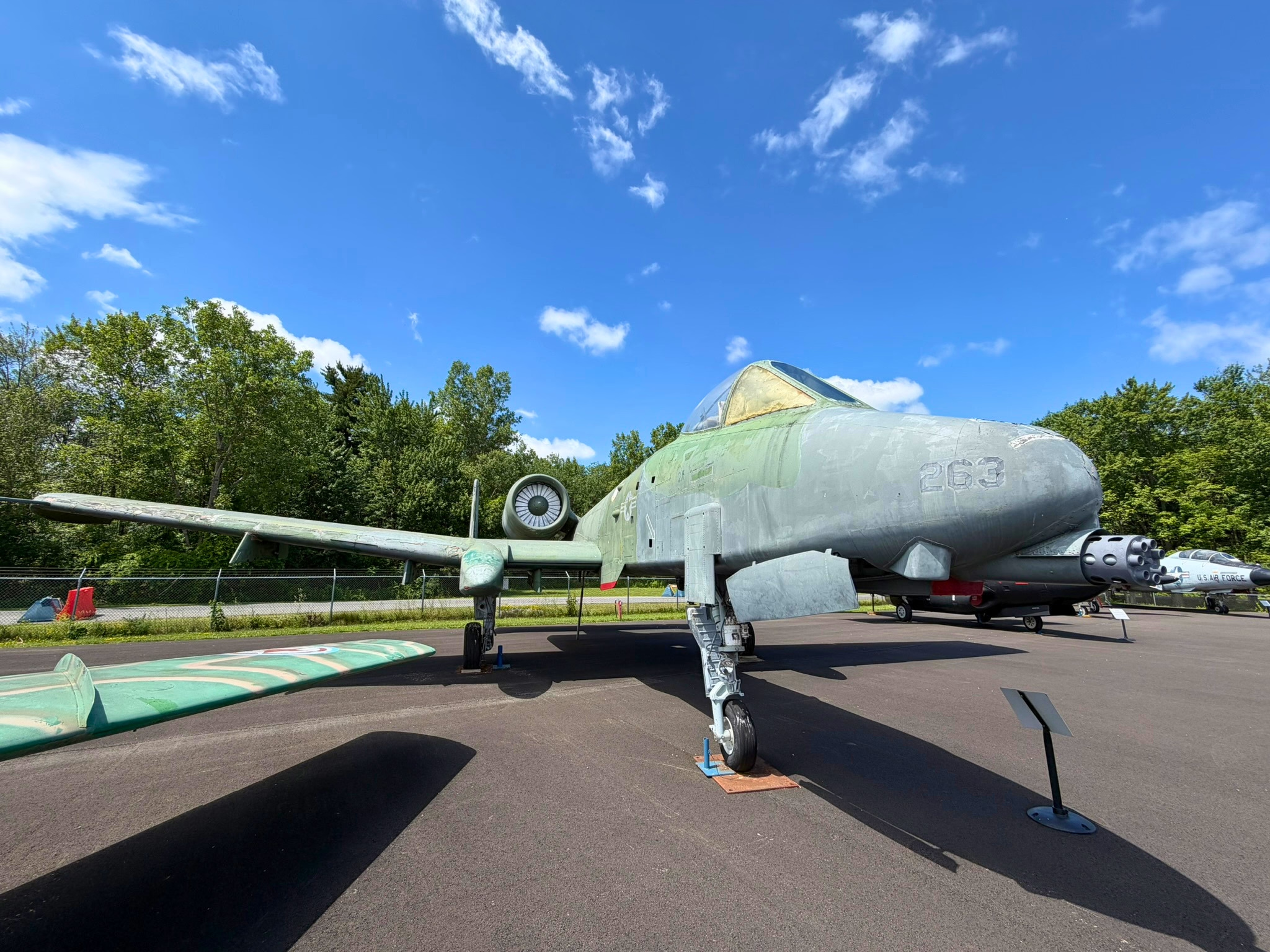
The A-10, universally known as the “Warthog”, was developed after the Vietnam War in response to the need for an aircraft dedicated to the close air support role. The mission involves attacking ground targets in close proximity to friendly forces, and had previously been undertaken by jet fighters with limited success. While speed is essential for a fighter, their lack of endurance over the battlefield, vulnerability to ground fire, and inability to accurately deliver heavy ordinance loads were liabilities. Thus, in 1976 the A-10 entered operational service with the U.S. Air Force as the only plane developed specifically for the close air support mission. While neither fast or sleek, the A-10 is extremely maneuverable and without peer in performing its mission. The A-10’s ability to absorb battle damage, loiter over the battlefield for extended periods, and accurately deliver ordinance is legendary.
By 1990, it was seemingly destined for retirement by the Air Force, which felt it was too slow to survive over a modern battlefield. Its brilliant performance in the 1991 Gulf War, however, gave it new life and the A-10 remains one of the Air Force’s most valuable assets. Of the 800 manufactured, 350 are expected to remain in service for the foreseeable future with active duty and reserve units.
The A-10 can carry over 12,000 lbs of air-to-ground ordinance; however, many consider its primary weapon to be the massive GAU-8 cannon, which fires foot long high explosive 30 mm rounds at a rate of 3,900 per minute or 65 per second. Another unique feature of the A-10 is its 1,200 lb titanium armor “bathtub”, which surrounds the cockpit and provides protection to the plane from ground fire.
ESAM’s A-10 entered service in 1976, and served with the U.S. Air Force’s 20th Tactical Fighter Wing at Shaw Air Force Base, South Carolina.
THIS AIRCRAFT IS ON LOAN FROM THE NATIONAL MUSEUM OF THE UNITED STATES AIR FORCE.
Serial No. 75-0263