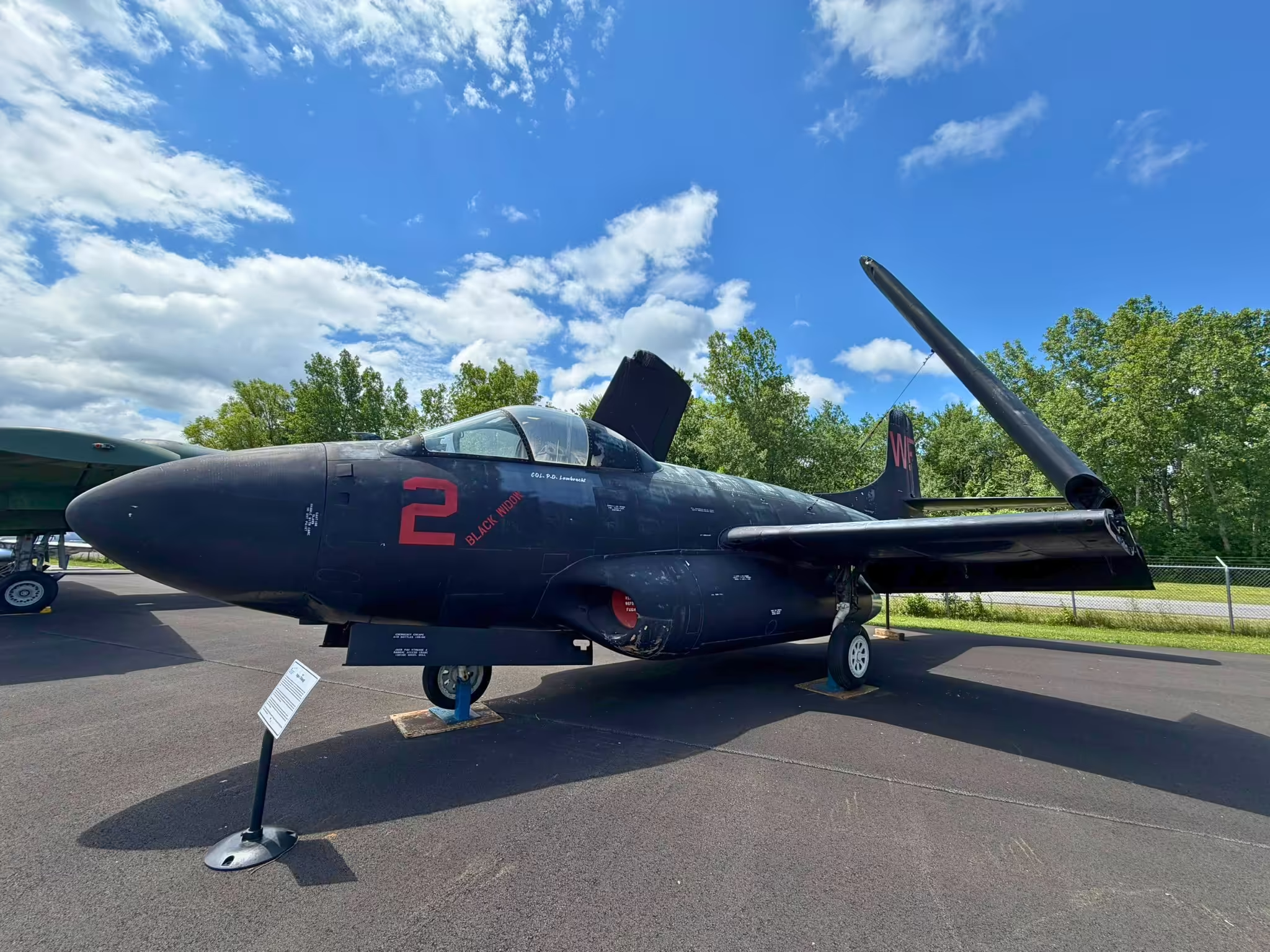
The F-3D Skyknight was a two-seat, twin-engine fighter, which entered service in 1952. Although originally intended to serve with the U.S. Navy aboard aircraft carriers, the F-3D instead equipped U.S. Marine Corps units from land bases. The period during and following World War II was one of rapidly expanding technologies in aircraft design, propulsion, and avionics. Equipped with one of the first airborne search radars, the Skyknight was able to intercept enemy aircraft at night using its APQ-35 search radar, which was housed in the nose and featured over 300 vacuum tubes! The size of these early airborne radars, introduced during WWII, necessitated larger fighters, together with a dedicated crew member to operate it, and were referred to as “Night Fighters”.
While only 237 were manufactured, the F-3D achieved some success during the Korean War as a night fighter, frequently serving as escort for U.S. B-29 bombers on night raids to North Korean targets, and combating the MiG-15. In fact, on the evening of November 2, 1952 over North Korea, the crew of a Skyknight shot down a Soviet-built, thus achieving the very first night jet-versus-jet combat victory. The F-3D continued its operational career into the early 1960’s, serving in the electronic warfare role during the Vietnam War.
Powered by two Westinghouse J34 turbojets, the F-3D was considered somewhat under-powered, and had a top speed of 600 mph. With respect to armament, the Skyknight was equipped with four 20mm cannon below the nose. Of special note is that the Skyknight acquired by ESAM was actually flown from Schenectady Airport at the General Electric Flight Test Center (current site of ESAM), where it was used to test the airborne radar developed for the legendary Grumman F-14 Tomcat fighter.
THIS AIRCRAFT WAS ACQUIRED FROM THE USS INTREPID SEA, AIR & SPACE MUSEUM IN NEW YORK CITY AND IS ON LOAN FROM THE NATIONAL MUSEUM OF NAVAL AVIATION AT PENSACOLA, FLORIDA.